AI Overview
Osteoarthritis (OA) is a degenerative joint disease characterized by the breakdown of cartilage, leading to chronic pain and decreased mobility. Regenerative medicine offers two groundbreaking non-surgical treatments: Platelet-Rich Plasma (PRP) Therapy and Stem Cell Therapy. PRP utilizes a concentrated dose of the patient’s own platelets to release growth factors that stimulate tissue repair and reduce inflammation. Stem Cell Therapy involves using undiluted mesenchymal stem cells to potentially regenerate lost cartilage and modulate the immune environment within the joint. While PRP is often ideal for mild to moderate OA, Stem Cell Therapy is frequently reserved for more advanced cases. Both therapies aim to reduce dependence on NSAIDs and delay or eliminate the need for joint replacement surgery.
Osteoarthritis (OA) is no longer viewed as an inevitable consequence of aging that can only be managed with painkillers or invasive surgery. As the “wear and tear” of joint cartilage progresses, many patients find that traditional treatments—such as corticosteroid injections or physical therapy—provide only temporary relief.
At Patients Medical, we specialize in regenerative medicine, a field dedicated to healing the body from the within. Two of the most effective treatments we offer are Platelet-Rich Plasma (PRP) and Stem Cell Therapy. But how do you choose between them? Understanding the science, the process, and the outcomes of each is the first step toward reclaiming your active lifestyle.
Understanding Osteoarthritis and the Need for Regeneration
In a healthy joint, cartilage acts as a slippery cushion, allowing bones to glide over each other. In osteoarthritis, this cartilage thins and becomes rough. Eventually, the bone-on-bone friction leads to osteophytes (bone spurs), swelling, and debilitating pain.
Standard treatments often focus on “masking” the pain. Regenerative therapies, however, focus on joint restoration. By using the body’s own biological building blocks, these treatments aim to alter the joint environment from one of degradation to one of repair.
What is Platelet-Rich Plasma (PRP) Therapy?
PRP Therapy is a concentrated preparation of autologous (your own) blood. Platelets are best known for clotting, but they are also “first responders” packed with growth factors that signal the body to repair damaged tissue.
The PRP Process:
- Blood Draw: A small amount of your blood is taken, similar to a routine blood test.
- Centrifugation: The blood is spun in a centrifuge to separate the platelets from the red blood cells.
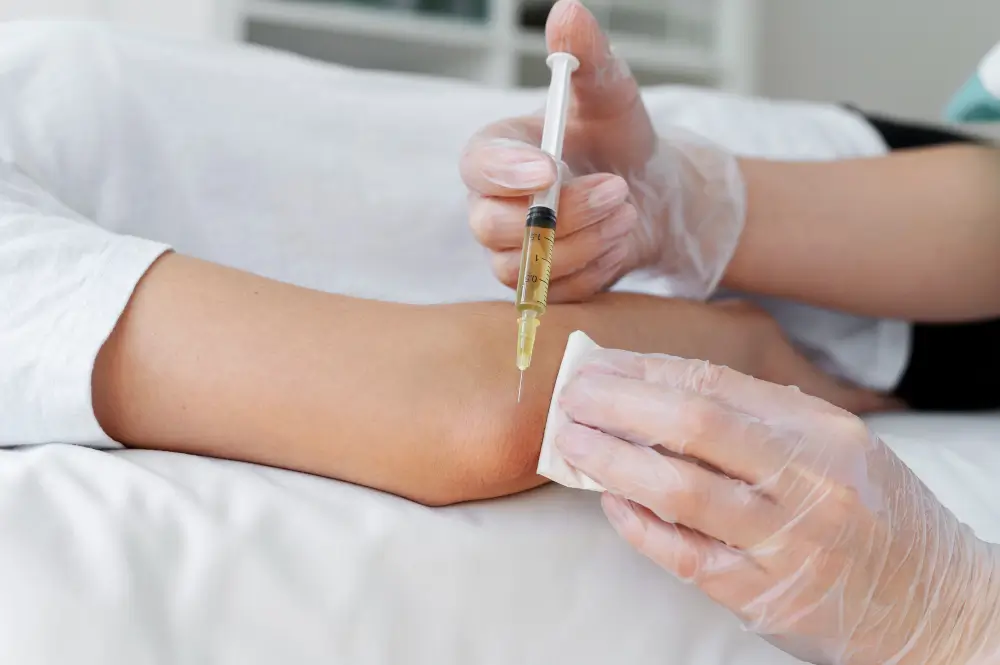
- Injection: The concentrated “liquid gold” is injected directly into the arthritic joint (knee, hip, or shoulder) under ultrasound guidance.
Benefits for Osteoarthritis:
- Reduced Inflammation: PRP inhibits the inflammatory cytokines that cause joint pain.
- Lubrication: It can improve the production of hyaluronic acid, enhancing joint lubrication.
- Minimal Risk: Since it uses your own blood, there is virtually no risk of allergic reaction or rejection.
What is Stem Cell Therapy for Arthritis?
While PRP uses “signalers” (growth factors), Stem Cell Therapy uses “builders.” Mesenchymal stem cells (MSCs) are undifferentiated cells that have the unique ability to transform into different types of tissue, including cartilage and bone.
The Stem Cell Process:
At Patients Medical, we often utilize stem cells derived from bone marrow or adipose (fat) tissue. These cells are harvested, processed, and then precision-injected into the affected joint.
Why Choose Stem Cells?
- Cartilage Support: Stem cells have the potential to adhere to damaged cartilage and stimulate the growth of new, healthy chondrocytes.
- Immune Modulation: They are highly effective at “resetting” the immune response in the joint, making them particularly useful for more advanced degeneration.
- Longevity: While PRP may require multiple sessions, Stem Cell Therapy often provides longer-lasting results with fewer treatments.
PRP vs. Stem Cell Therapy: The Comparison
| Feature | Platelet-Rich Plasma (PRP) | Stem Cell Therapy |
| Primary Mechanism | Growth factors stimulate repair | Cells differentiate and regenerate tissue |
| Best For | Mild to Moderate Osteoarthritis | Moderate to Severe Osteoarthritis |
| Source | Peripheral blood | Bone marrow or adipose tissue |
| Recovery Time | Immediate (minimal soreness) | Minimal (slight site soreness) |
| Typical Cost | Lower | Higher |
Which Treatment is Right for You?
The “right” choice depends on several factors that our specialists at Patients Medical evaluate during your initial consultation:
- Severity of Joint Damage: PRP is often incredibly effective for athletes or patients in the early stages of OA. If the cartilage is significantly depleted (Bone-on-Bone), Stem Cell Therapy may offer a more robust biological response.
- Age and Health: Younger patients generally have higher platelet counts and more “potent” growth factors. Older patients or those with chronic conditions might benefit more from the concentrated regenerative power of stem cells.
- Treatment Goals: Are you looking to delay a knee replacement for 5 years, or are you looking for a quick return to tennis? We align the therapy with your lifestyle goals.
The Patients Medical Advantage: A Holistic Approach
We don’t just “inject and send you home.” Our Holistic Arthritis Treatment protocols ensure that the environment your cells are injected into is healthy. This includes:
- Anti-Inflammatory Nutrition: A customized diet to lower systemic inflammation.
- Nutrient Supplementation: Optimizing levels of Vitamin D3, Vitamin C, and Glucosamine to support the “new” tissue.
- Physical Therapy Coordination: Ensuring your joints are moving correctly to prevent further wear.
Frequently Asked Questions (FAQ)
Q. Is the procedure painful?
A. The injections involve a small needle and are usually performed with a local anesthetic. Most patients describe it as a “pressure” sensation rather than sharp pain.
Q. How long does it take to see results?
A. Regeneration takes time. While some feel relief within weeks due to reduced inflammation, the full tissue-repair benefits usually peak between 3 to 6 months post-procedure.
Q. Are these treatments covered by insurance?
A. Currently, most insurance providers consider these treatments “elective” or “experimental.” However, at Patients Medical, we offer various payment options and can provide documentation for HSA/FSA reimbursement.
Q. Can I go back to work the next day?
A. Yes. Most patients can return to light daily activities immediately. We usually recommend avoiding high-impact exercise (like running) for about two weeks to let the cells settle.
Q. How many treatments will I need?
A. For PRP, a series of 2–3 injections is common. For Stem Cell Therapy, many patients achieve significant relief with a single, potent treatment.
Reclaim Your Mobility Today
Don’t wait until surgery is your only option. Discover if PRP or Stem Cell Therapy can help you walk, run, and live without pain. At Patients Medical, our integrative experts are here to guide you every step of the way.
Contact Us for a Consultation:
- Phone: (212) 794-8800
- Email: info@patientsmedical.com
- Location: 1148 5th Ave, Suite 1B, New York, NY 10128

Dr. Kulsoom Baloch
Dr. Kulsoom Baloch is a dedicated donor coordinator at Egg Donors, leveraging her extensive background in medicine and public health. She holds an MBBS from Ziauddin University, Pakistan, and an MPH from Hofstra University, New York. With three years of clinical experience at prominent hospitals in Karachi, Pakistan, Dr. Baloch has honed her skills in patient care and medical research.
- Dr. Kulsoom Baloch

- Dr. Kulsoom Baloch

- Dr. Kulsoom Baloch

- Dr. Kulsoom Baloch