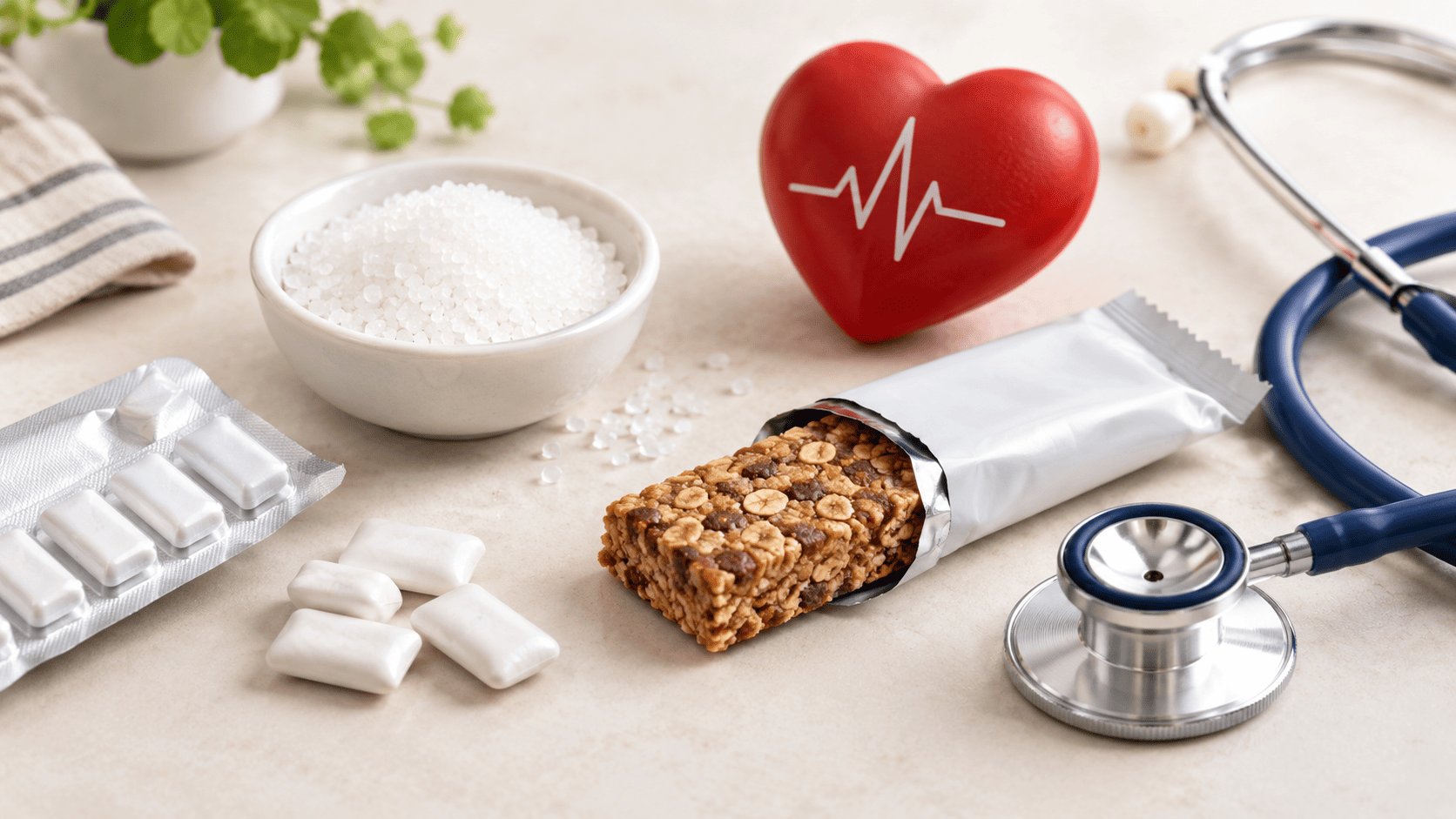
Quick answer: A 2026 Cleveland Clinic-linked study presented at the European Society of Cardiology Congress found that people with the highest blood levels of xylitol — a common sugar substitute — had a 57% higher risk of heart attack, stroke, or death compared to those with the lowest levels. The study is observational, so it shows an association, not proof of direct cause. If you rely heavily on sugar-free products, this is worth understanding, not panicking over.
If you’ve seen headlines this week about a popular sugar-free sweetener being linked to heart attacks, you’re not imagining it — it’s everywhere right now. Xylitol shows up in sugar-free gum, “keto-friendly” baked goods, protein bars, toothpaste, and a growing number of “healthy” packaged foods. So what’s actually going on, and does it matter for your day-to-day health?
What did the study actually find?
Researchers followed over 17,000 people across two large studies and measured blood xylitol levels. People in the highest group had a 57% greater risk of major cardiovascular events — heart attack, stroke, or death — over six years, even after adjusting for age, diabetes, smoking, and cholesterol. Lab experiments in earlier related research also showed xylitol can make blood platelets clump together more easily, which is one proposed mechanism behind the clotting risk.
Is this proof that xylitol causes heart attacks?
No — and this distinction matters. This is an observational study, which means it shows a pattern, not a direct cause-and-effect relationship. People with higher xylitol levels might also share other risk factors that weren’t fully accounted for. Researchers themselves have said further studies are needed. That said, this is now the second major sugar alcohol — after erythritol — linked to similar cardiovascular signals in recent years, which makes the pattern harder to dismiss as a one-off.
Why this matters beyond just “avoid xylitol”
Here’s the bigger picture that often gets lost in the headlines: sweeteners like xylitol are frequently marketed toward people managing diabetes, weight, or metabolic conditions — the exact population already at higher cardiovascular risk. If you’re using sugar-free products specifically because you’re managing blood sugar, insulin resistance, or metabolic syndrome, this study is a reason to look at your overall metabolic picture more closely, not just swap one sweetener for another.
Where is xylitol actually hiding?
It’s not just gum. Xylitol shows up in:
- Sugar-free and “keto” baked goods, candies, and ice cream
- Protein bars and diet snacks
- Peanut butter and nut butters (some brands)
- Toothpaste and mouthwash
- Cough syrups and diabetic-friendly food products
Check ingredient labels — it’s often listed plainly as “xylitol” or under “sugar alcohol” blends.
What are safer alternatives?
Not all sweeteners carry the same signal. Monk fruit and stevia are currently considered lower-risk options — they haven’t shown the same cardiovascular associations and are generally recognized as safe by regulatory bodies. Allulose is another emerging option with minimal blood sugar impact. If you’re specifically avoiding sugar for metabolic reasons, these are reasonable substitutes to explore with your provider.
So what should you actually do?
You don’t need to panic-check every label today. But if you consume xylitol-containing products regularly — especially if you already have risk factors like diabetes, insulin resistance, or a history of cardiovascular issues — it’s worth having a conversation with your provider. This is also a good moment to look at the bigger picture: how your body is managing blood sugar, inflammation, and metabolic load overall, rather than focusing on one ingredient in isolation.
FAQs
Is xylitol bad for you?
In moderate amounts, xylitol has long been considered safe and is even beneficial for dental health. However, recent research links higher blood levels of xylitol to increased cardiovascular risk. It’s not an immediate danger for most people, but it’s no longer considered risk-free, especially for those with existing heart or metabolic conditions.
How much xylitol is safe to consume daily?
There’s no officially established “safe” cardiovascular threshold yet, since the research is still observational and evolving. Generally, sugar alcohols in amounts above 10 grams a day can also cause digestive discomfort. Until more research clarifies safe limits, moderation is the practical approach.
What foods contain xylitol?
Sugar-free gum, keto and diabetic-friendly baked goods, some peanut butters, protein bars, toothpaste, mouthwash, and certain cough syrups commonly contain xylitol. Always check the ingredient label, since it’s not always obvious from the product name.
Is xylitol worse than sugar for your heart?
That’s not yet clear. The concern isn’t that xylitol behaves like sugar — it’s that it may independently affect blood clotting, which is a separate mechanism from sugar’s metabolic effects. Both can pose risks in different ways, which is why an overall balanced diet matters more than swapping one sweetener for another.
Are stevia and monk fruit safer than xylitol?
Based on current evidence, yes — stevia and monk fruit haven’t shown the same cardiovascular associations seen with xylitol and erythritol. They’re generally considered safer alternatives, particularly for people managing blood sugar or heart health.
Does xylitol raise blood sugar?
No, that’s actually xylitol’s main selling point — it has minimal impact on blood glucose compared to regular sugar, which is why it’s popular in diabetic-friendly products. The concern from this new research is unrelated to blood sugar; it’s about its effect on cardiovascular risk and blood clotting.

J. Smith
- J. Smith

- J. Smith

- J. Smith

- J. Smith