
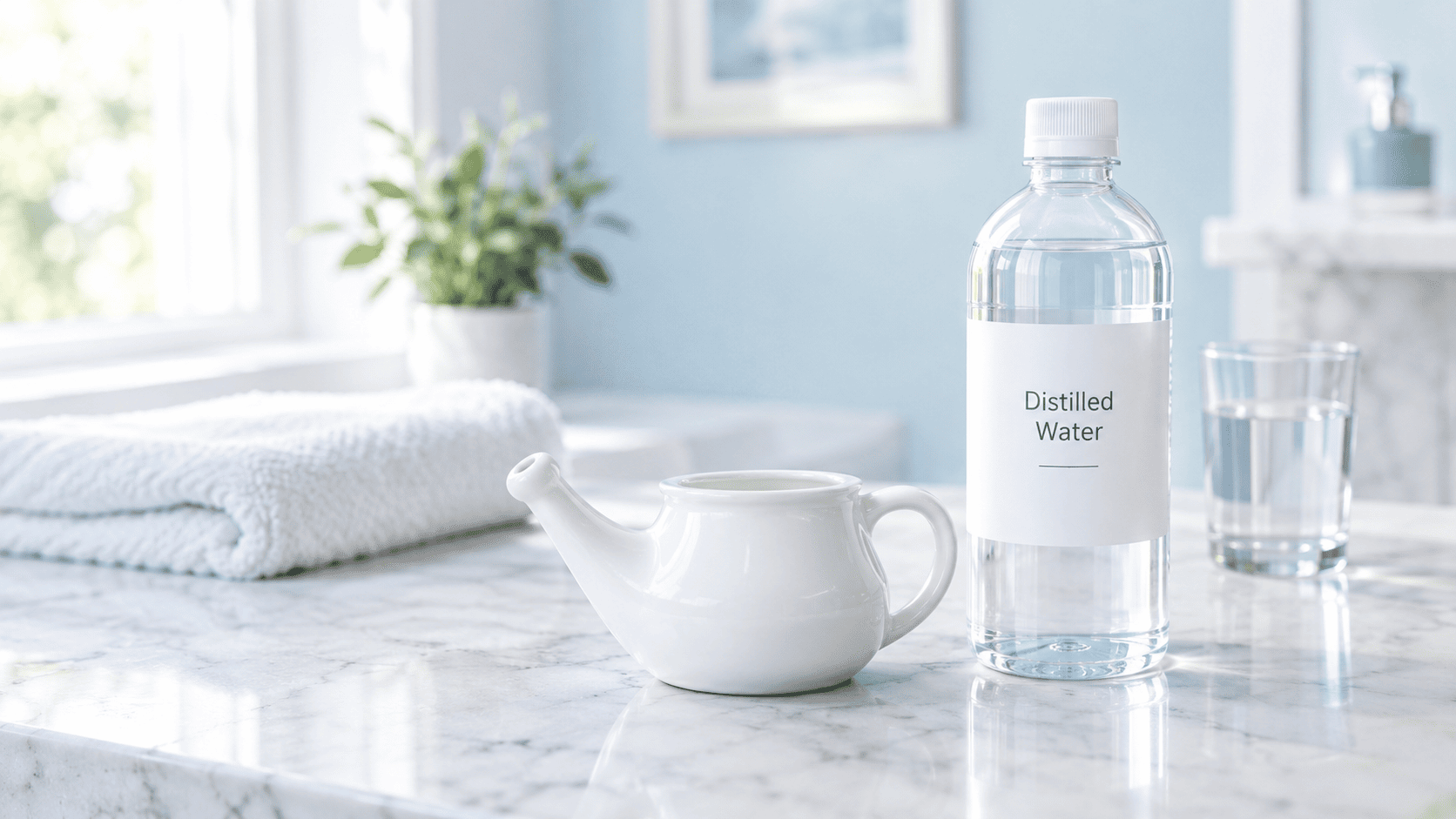
Naegleria fowleri is a single-celled amoeba that lives naturally in soil and warm freshwater. If water containing it goes up the nose, it can travel along the olfactory nerve to the brain and cause primary amebic meningoencephalitis (PAM), an infection that destroys brain tissue and is nearly always fatal. A neti pot pushes water deliberately up the nasal passages, so if the water is contaminated, the amoeba gets exactly the route it needs.
The key point: the nose is the only way in. Swallowing water containing the amoeba does not cause infection, and the infection does not spread from person to person. That is why a glass of tap water is fine to drink, yet the same water is not safe for a sinus rinse. The FDA puts it plainly: tap water isn’t adequately filtered or treated for use as a nasal rinse, and organisms that stomach acid would kill can survive in nasal passages.
Other amoebas can reach the brain the same way. CDC names Acanthamoeba alongside Naegleria as a risk in unsafe rinse water, and a 2018 Seattle case report described a woman who died of a different brain amoeba, Balamuthia mandrillaris, after using tap water in a neti pot.
How common is it?
Extremely rare. In the United States there are typically fewer than 10 Naegleria infections a year, and most follow swimming or diving in warm lakes and rivers in summer. CDC counted 167 U.S. cases between 1962 and 2024; four people survived.
Sinus-rinse cases are rarer still, but they are real and documented:
- 2011, Louisiana: two people who regularly rinsed with tap water in neti pots died. The amoeba was found in water from both homes, but not in the municipal treatment plants or distribution systems serving them. It had colonized the homes’ plumbing.
- February 2023, Florida: a man died after infection that health officials said was possibly linked to sinus rinses with tap water. It was an unusual winter case.
- 2024, Texas: a previously healthy 71-year-old woman became ill within 4 days of using RV tap water in a nasal irrigation device and died eight days after symptoms began (CDC MMWR, May 2025).
The takeaway is not panic. It is that the risk is almost entirely preventable with one simple habit: change the water.
Which water is safe for a neti pot or sinus rinse?
CDC and FDA agree on the safe options. Pick at least one:
| Water type | Safe for sinus rinse? | Notes |
| Store-bought water labeled “distilled” or “sterile” | Yes | Easiest and most reliable option. Check the label. |
| Tap water that is boiled and cooled | Yes | CDC: rolling boil for 1 minute (3 minutes above 6,500 feet), then cool. FDA’s consumer advice says 3 to 5 minutes and cooling to lukewarm. Store in a clean, closed container and use within 24 hours. |
| Tap water through a filter labeled NSF 53, NSF 58, or “absolute pore size of 1 micron or smaller” | Yes, if the label matches | A filter without one of these ratings does not count. |
| Untreated tap or faucet water | No | Even treated, drinkable tap water can carry organisms that are harmless to swallow but dangerous in the nose. |
| Tap water plus a salt packet | No | Salt does not disinfect (see next section). |
| RV, camper, or unfamiliar water while traveling | No, unless boiled or distilled | The 2024 Texas case involved an RV water system. |
| Bottled drinking or spring water not labeled distilled or sterile | Not recommended | CDC specifies water labeled distilled or sterile. |
Last resort: if none of these is available, CDC publishes a household-bleach disinfection method for rinse water. It uses more bleach than drinking-water guidance, so follow CDC’s exact instructions and do not improvise.
Does salt make tap water safe? Can Naegleria fowleri survive in saline?
No, and yes. Naegleria lives naturally in fresh water rather than the ocean, so many people assume the salt in a neti pot solution will kill it. CDC researchers tested exactly this after the 2011 Louisiana deaths. Amoebas survived for more than four hours in salt water mixed from neti pot packets, far longer than anyone waits before rinsing. As the CDC investigator put it, the salt packet is not a disinfection step. Start with safe water, then add the salt.
Can you tell if water has brain-eating amoeba in it?
No. CDC notes that even water that looks, smells, and tastes clean can contain the amoeba. There is also no routine environmental testing of lakes and rivers for Naegleria fowleri, according to the Louisiana Department of Health. Because you cannot see or test for it at home, the safe approach is to assume untreated water is unsafe for your nose and treat the water instead.
Why do tap water and still water have it?
Naegleria fowleri is heat-loving. It lives in soil and warm freshwater such as lakes, rivers, ponds, and hot springs, and becomes dangerous when water stays warm, above roughly 25°C (77°F). Shallow, still, or slow-moving water heats up fastest in summer sun, which is why health agencies single it out for swimmers.
It is not only a lake problem. CDC says these amoebas can also grow in public and private water tanks, pipes, and the water heaters of some homes and buildings. In the Louisiana cases, the municipal supply met standards, but the amoeba had colonized the household plumbing. Poorly maintained private systems, such as an RV tank, are an extra risk. It is also worth knowing that unfamiliar water while traveling is a well-known source of other illness, such as travelers’ diarrhea, so bring distilled water for rinsing on the road.
I used tap water in my sinus rinse. Am I going to die?
Almost certainly not. Infection from a sinus rinse is exceptionally rare, and many people have used tap water without harm. But it is not a risk worth taking again. Here is what to do:
- Stop using tap water for rinsing. Switch to distilled, sterile, or boiled-and-cooled water today.
- Watch for symptoms for about two weeks. CDC says symptoms usually begin around day 5 after exposure but can appear anywhere from day 1 to day 12.
- Go to the ER immediately if you develop a sudden headache, fever, vomiting, stiff neck, or confusion, and tell the doctors you rinsed with tap water. Early recognition matters because the infection moves fast and is hard to diagnose.
If you are simply worried and feel well, call your doctor or a pharmacist for reassurance. Do not try to treat or “flush out” a possible exposure at home.
Symptoms and timeline: how fast does it progress?
Early PAM symptoms look like many ordinary illnesses, which is part of the danger:
Most headaches and fevers have common causes, and these pages explain them. The difference here is context and speed: symptoms that begin within days of rinsing your nose with tap water, or after swimming in warm fresh water, and that worsen quickly, are an emergency. As the infection progresses, additional symptoms can include a stiff neck, confusion, inattention to people and surroundings, seizures, hallucinations, and coma.
How long does it take to kill? Per CDC, symptoms start about 5 days after exposure (range 1 to 12 days), and death typically occurs within about 5 days of symptom onset, though it can occur anywhere from 1 to 18 days. The infection is nearly always fatal, which is exactly why prevention is the whole game.
Red alert box (red-bordered callout): Go to the emergency room now if you or a child develop sudden severe headache, fever, vomiting, stiff neck, or confusion after nasal rinsing or after swimming in warm freshwater. Do not wait to see if it passes. Say the words “I rinsed my sinuses with tap water” or “I was in a lake” so doctors consider this diagnosis.
How to use and clean a neti pot safely
- Wash and dry your hands, and check that the device is clean and completely dry.
- Use safe water (distilled, sterile, boiled and cooled, or properly filtered) and the saline mixture supplied with the device or one you prepare yourself.
- Tilt and rinse: lean over a sink, tilt your head sideways with forehead and chin roughly level, breathe through your open mouth, and let the solution flow in the upper nostril and out the lower. Gently clear your nose, then repeat on the other side. (This is the FDA’s technique.)
- Clean after each use with safe water and let the device air-dry. Do not leave leftover solution sitting around.
- Follow the manufacturer’s directions, including how and when to replace the device.
Prefer something simpler? Pre-made sterile saline sprays and squeeze bottles are another option for gentler congestion relief.
Who should be extra careful?
- Children: the FDA advises talking with a health care provider before using nasal rinsing for a child, and notes younger children may not tolerate it. See our page on children’s health.
- People with weakened immune systems: the FDA advises consulting your provider before using any nasal irrigation system.
- Anyone with a history of trauma to the nose, eye, or brain: get a doctor’s approval first.
- If rinsing makes things worse: the FDA says to return to your provider if symptoms don’t improve or worsen, especially with fever, nosebleeds, or headaches while using the rinse.
- Ritual or religious nasal rinsing (for example, as part of wudu, yoga, or ayurvedic practice): the same water rules apply. CDC publishes a Safe Ritual Nasal Rinsing fact sheet in several languages.
What about swimming? How do you avoid the amoeba outdoors?
Most infections come from swimming or diving in warm freshwater in summer, so CDC advises assuming a risk whenever you enter warm freshwater. To lower it, avoid getting water up your nose: hold your nose or wear a nose clip when jumping or diving in, and keep your head above water in hot springs. The amoeba is not found in salt water such as the ocean.
Frequent sinus trouble? Find out why you need to rinse
If you rely on a sinus rinse every day, the better question is why. Persistent congestion often traces back to allergies or an environmental trigger. A clinician can look at causes such as allergy testing, mold testing, and allergy treatment options. Our physicians can help; you can schedule an appointment to talk through chronic sinus or allergy symptoms. (If you ever suspect a brain infection, go to the ER, not a clinic visit.)
Frequently asked questions
Can I get a brain-eating amoeba from a sinus rinse?
Yes, but it is very rare. Naegleria fowleri can cause a brain infection if water containing it goes up the nose, and a few people have died after rinsing their sinuses with untreated tap water. Using distilled, sterile, or boiled and cooled water removes this risk.
How do I know if water has brain-eating amoeba in it?
You can’t tell by looking, smelling, or tasting. CDC notes the amoeba can be present even in water that looks and tastes clean, and lakes are not routinely tested. Treat any untreated or unfamiliar water as unsafe for your nose and use distilled, sterile, or boiled and cooled water for rinsing.
Why does still water have brain-eating amoeba?
Naegleria fowleri is a heat-loving amoeba that lives naturally in warm freshwater and soil. Shallow, still, or slow-moving water warms quickly in summer, which helps it grow. It can also grow in warm pipes, tanks, and water heaters in some buildings.
Can Naegleria fowleri survive in saline?
Yes, in the salt solutions used with neti pots. CDC researchers found the amoeba survived more than four hours in saline mixed from neti pot salt packets and tap water. Salt does not make tap water safe, so always start with distilled, sterile, or boiled and cooled water.
I used tap water in my sinus rinse. Am I going to die?
Almost certainly not. Infection from a sinus rinse is exceptionally rare. Switch to safe water now and watch for symptoms for about two weeks. If you develop headache, fever, vomiting, stiff neck, or confusion, go to the emergency room right away and tell them about the rinse.
I got water up my nose. Could it be a brain-eating amoeba?
Infection is rare, and most water-up-the-nose episodes do not lead to it. Symptoms usually start about 5 days after exposure, within a range of 1 to 12 days. If headache, fever, nausea, vomiting, or a stiff neck develop after warm freshwater exposure, seek emergency care and mention the exposure.
How long does it take for brain-eating amoeba to kill you?
According to CDC, symptoms usually start about 5 days after exposure, and death typically occurs within about 5 days after symptoms begin, though it can range from 1 to 18 days. The infection is nearly always fatal, so early emergency care matters.
Is there brain-eating amoeba in tap water?
It can be, rarely, in home plumbing, water heaters, or private tanks such as an RV system. Drinking tap water does not cause infection, because the amoeba must go up the nose. That is why tap water should not be used for neti pots unless it has been boiled and cooled.
Is a neti pot safe if I use the right water?
Yes. The FDA says neti pots and similar devices are usually safe and effective when used and cleaned properly. Use distilled, sterile, or boiled and cooled water, keep the device clean and dry, and follow the manufacturer’s directions.

J. Smith
- J. Smith
- J. Smith

- J. Smith

- J. Smith