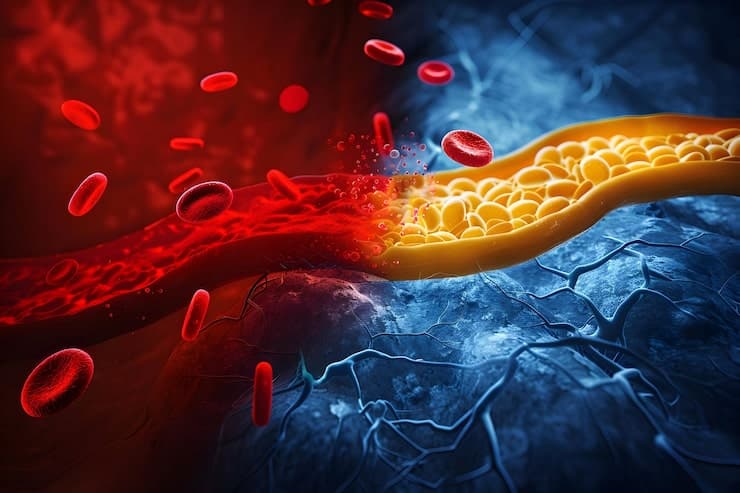
A new study published in JAMA has revealed a striking gap between the cholesterol levels of everyday Americans and the targets set by the updated 2026 dyslipidemia guidelines. Led by Dr. Shady Abohashem of Harvard Medical School and Massachusetts General Hospital, the research suggests that millions of people may be walking around with LDL cholesterol levels well above where they should be — and many don’t even know it.
What the Study Found
The research team analyzed data from the National Health and Nutrition Examination Survey (NHANES), covering U.S. adults aged 30 to 79, and compared their actual LDL cholesterol (LDL-C) levels against the new guideline-recommended goals.
For people without a history of heart disease (primary prevention):
Roughly 1 in 3 adults (32.2%) had LDL levels above their recommended goal. The likelihood of missing the target rose sharply with cardiovascular risk — from about 1 in 10 low-risk adults to more than 8 in 10 high-risk adults. Most of these individuals weren’t on any cholesterol-lowering medication at all.
For people who already had a heart attack or stroke (secondary prevention):
The gap was even wider — nearly 4 in 5 people in this group were above their target. But the reason was different: most were already on a statin or similar therapy, they just weren’t reaching the stricter new goals. Roughly 38% weren’t receiving any treatment at all.
Why This Matters
Heart disease remains one of the leading causes of death in the United States, and a large share of heart attacks and strokes are preventable with medications that have been available for decades. The study highlights two separate problems that need two separate solutions:
- People without heart disease who are above target often simply haven’t started treatment yet.
- People who’ve already had a cardiac event are frequently on treatment but need it adjusted — a different statin, a higher dose, or an additional medication — to actually hit the new, lower targets.
What Are the New LDL Goals?
The updated guidelines set different LDL-C targets depending on a person’s risk category:
- Low-risk adults: under 160 mg/dL
- Borderline-risk adults: under 100 mg/dL
- High-risk adults: under 70 mg/dL
- Adults with established heart disease (ASCVD): under 70 mg/dL
- Adults with ASCVD at very high risk: under 55 mg/dL
What You Can Do
Cholesterol problems are often silent — there are no symptoms until a heart attack or stroke happens. Experts recommend:
- Get your LDL checked. A simple blood test can tell you where you stand.
- Know your personal target, since it depends on your individual risk factors, not just a single “normal” number for everyone.
- Ask your doctor directly, especially if you’re already on cholesterol medication but haven’t had your levels rechecked recently.
- Don’t assume you’re fine just because you feel fine — high cholesterol typically has no warning signs.
A Holistic Approach to Cholesterol Management
While the study underscores the importance of medication where it’s needed, many patients are also looking at their cholesterol through a wider lens — one that looks at root causes rather than just numbers on a lipid panel.
Dr. Rashmi Gulati, a physician specializing in functional and holistic medicine, is known for this kind of approach with patients dealing with cholesterol and related metabolic issues. Rather than treating a high LDL reading in isolation, functional medicine typically looks at the underlying drivers — diet quality, gut health, chronic inflammation, stress, sleep, hormonal balance, and lifestyle patterns — that can all influence cholesterol over time. The goal is to build a personalized plan around nutrition, movement, stress management, and targeted lifestyle changes, working alongside conventional treatment rather than replacing it when medication is genuinely needed.
This kind of integrative approach can be especially useful for the “primary prevention” group highlighted in the study above — people who aren’t yet on medication and have room to improve their numbers through sustained lifestyle changes before considering drug therapy, ideally in partnership with their doctor.
The Bottom Line
This study isn’t meant to alarm people — as the researchers put it, it’s “a starting line, not a verdict.” But it does underline how big the disconnect can be between where guidelines say cholesterol should be and where it actually is for most Americans. If you haven’t had your LDL checked recently, or you’re not sure what your personal target is, it’s worth bringing up at your next doctor’s visit.
This article is for informational purposes only and is not a substitute for professional medical advice. Please consult your doctor regarding your individual cholesterol levels and treatment plan.

J. Smith
- J. Smith
- J. Smith

- J. Smith

- J. Smith