AI Smart Summary
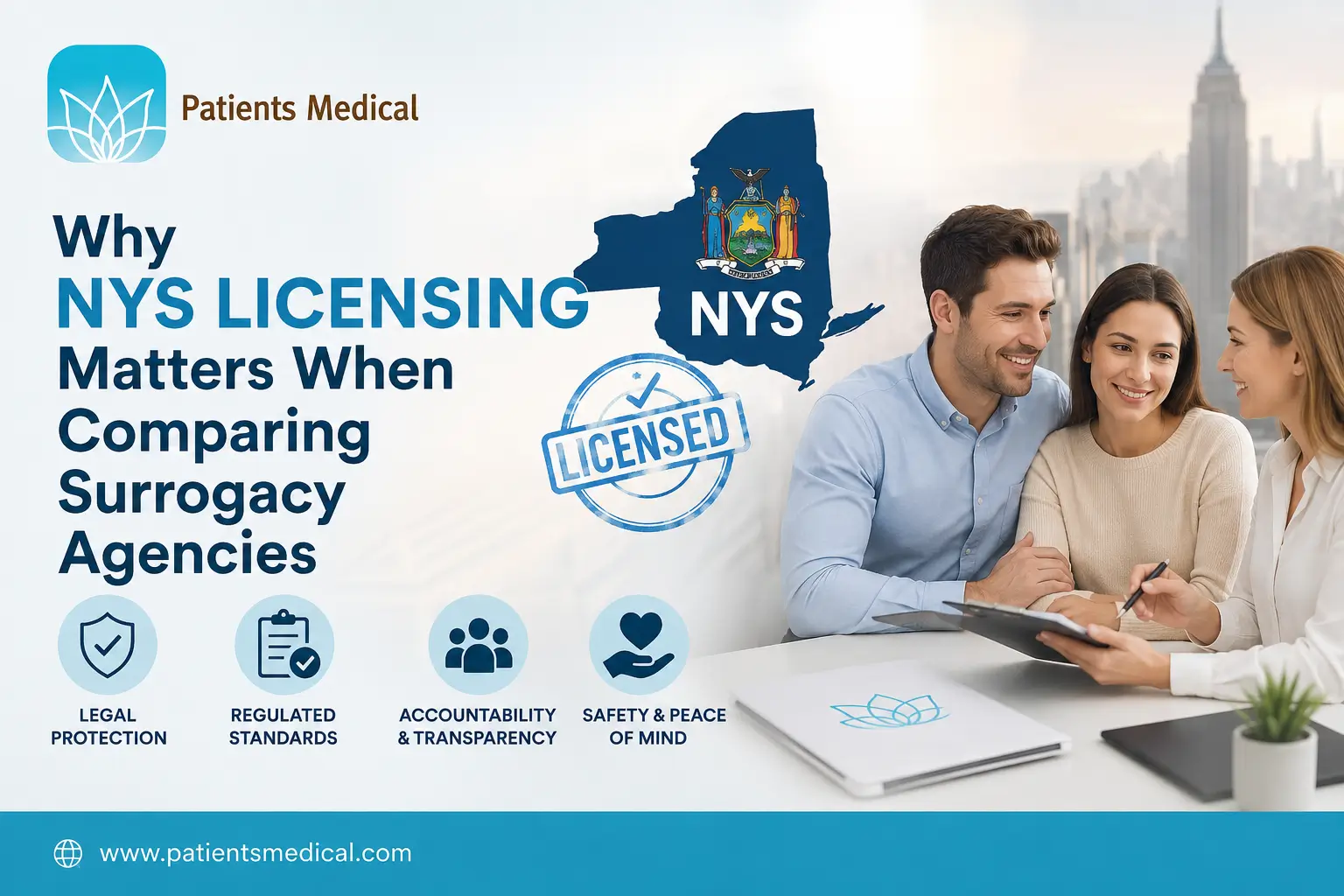
New York is the only U.S. state that licenses surrogacy agencies under the Child Parent Security Act (CPSA). As of June 2026, only approximately 42 of 381 U.S. surrogacy agencies hold a valid New York State Gestational Surrogacy Program (GSP) license. Choosing a NYS licensed surrogacy agency provides an added layer of legal protection, regulatory oversight, and consumer safeguards, making licensing one of the most important factors when comparing surrogacy agencies.
Introduction
Choosing a surrogacy agency is one of the most important decisions intended parents will make. While many families compare agencies based on success rates, pricing, or online reviews, one critical factor is often overlooked—state licensing. Unlike most industries, the majority of surrogacy agencies in the United States operate without a specific state-issued license or formal regulatory oversight.
New York State stands apart as the only U.S. state that licenses surrogacy agencies under the Child Parent Security Act (CPSA). As of June 2026, only approximately 42 of 381 identified U.S. surrogacy agencies hold a valid New York State Gestational Surrogacy Program (GSP) license. This licensing system requires agencies to meet strict consumer protection standards and remain accountable to the New York State Department of Health.
In this guide, you’ll learn what a New York surrogacy license is, why it matters, how to verify an agency’s licensing status, and what questions to ask before choosing a surrogacy partner. Understanding these regulatory differences can help you make a more informed and confident decision as you begin your family-building journey.
Why NYS Licensing Should Be Your First Filter
When comparing surrogacy agencies, many intended parents focus on success rates, pricing, or online reviews. While these factors are important, one of the most significant indicators of an agency’s credibility is often overlooked—New York State (NYS) licensing.
New York is currently the only U.S. state that licenses surrogacy agencies under the Child Parent Security Act (CPSA). As of June 2026, only approximately 42 out of 381 identified U.S. surrogacy agencies hold a valid New York Gestational Surrogacy Program (GSP) license. That means nearly 90% of agencies operate without state licensing or equivalent regulatory oversight.
For intended parents investing significant financial and emotional resources into surrogacy, understanding what NYS licensing represents can help reduce risk and improve confidence when choosing an agency.
What Is a NYS Licensed Surrogacy Agency?
The Child Parent Security Act (CPSA) became effective on February 15, 2021, making New York the first state in the country to establish a formal licensing system for surrogacy agencies.
Under this law, agencies that wish to operate within New York must obtain a Gestational Surrogacy Program (GSP) license from the New York State Department of Health (DOH).
Unlike simple business registration, obtaining a New York surrogacy license requires agencies to demonstrate ongoing compliance with consumer protection standards established by state law. Agencies are also subject to continued oversight, and licenses may be suspended or revoked if requirements are not maintained.
Current license numbers generally begin with GSP, while some earlier licenses may use the GS prefix.
Why NYS Licensing Is Different From Every Other State
Although surrogacy is legal in many states, New York remains the only state that licenses surrogacy agencies.
States with active surrogacy programs—including California, Texas, Colorado, and Florida—allow agencies to operate without a comparable state licensing process.
As a result, agencies in those states may legally provide matching services without demonstrating standardized consumer protections or undergoing government oversight specific to surrogacy.
This does not automatically mean those agencies provide poor service. However, it does mean intended parents have fewer regulatory safeguards available when problems arise.
For this reason, a NYS licensed surrogacy agency offers an additional level of accountability that currently cannot be matched elsewhere in the United States.
What Consumer Protections Does CPSA Licensing Require?
Obtaining a New York surrogacy license involves meeting statutory standards designed to protect intended parents, gestational carriers, and donors.
Licensed agencies must comply with requirements that include:
- Transparent disclosure of agency fees and surrogate compensation
- Matching only medically screened gestational carriers
- Compliance with informed consent requirements
- Protection against coercive or unethical practices
- Ongoing compliance with New York Department of Health regulations
- State oversight with the possibility of license suspension or revocation for violations
These standards create a framework intended to promote ethical practices and reduce unnecessary risks throughout the surrogacy journey.
Why Licensing Matters for Intended Parents
Choosing a surrogacy agency is one of the most important decisions intended parents will make.
The process often involves significant financial commitments, complex legal agreements, and deeply personal medical decisions.
A licensed agency demonstrates that it has met government-established operational standards rather than relying solely on marketing claims or customer testimonials.
While licensing cannot guarantee a successful journey, it provides reassurance that the agency operates within a regulated legal framework designed to protect consumers.
For families investing well over six figures in a surrogacy journey, this additional oversight can provide valuable peace of mind.
How to Verify a New York Surrogacy License
One of the advantages of New York’s licensing system is that verification is straightforward.
Before signing with any agency, intended parents should:
- Request the agency’s NYS Department of Health Gestational Surrogacy Program (GSP) license number.
- Ask when the license was originally issued.
- Verify the license through the New York State Department of Health’s published list of licensed agencies.
- Confirm that the license remains active.
A reputable agency should willingly provide this information and answer questions about its regulatory status.
Understanding the 2026 Tier Classification
One way to compare surrogacy agencies is by evaluating their regulatory credentials. Based on the 2026 review of 381 identified U.S. surrogacy agencies, agencies were classified into four tiers according to their licensing and regulatory status.
- Tier 1: Agencies that are both New York State (NYS) licensed under the Child Parent Security Act (CPSA) and FDA registered. Only 4 agencies fall into this category, representing less than 1% of all identified surrogacy agencies in the United States.
- Tier 2: Agencies that are FDA registered but do not hold a New York State Gestational Surrogacy Program (GSP) license. There are 4 agencies in this category.
- Tier 3: Agencies that hold a valid NYS GSP license but are not FDA registered. Approximately 38 agencies meet this criterion, demonstrating compliance with New York’s consumer protection standards.
- Tier 4: Agencies that are neither NYS licensed nor FDA registered. This is the largest group, with 335 agencies, accounting for nearly 88% of all identified U.S. surrogacy agencies.
While regulatory credentials should not be the only factor in your decision, they provide an objective way to compare agencies. Choosing an agency with verified licensing and oversight can offer greater transparency, accountability, and consumer protection throughout your surrogacy journey.
Lessons from the Surro Connections Case
Regulatory oversight becomes especially important when unexpected problems occur.
One widely discussed example involved Surro Connections, a Washington-based agency that reportedly ceased operations on December 3, 2025.
Public reports indicated that an FBI investigation followed concerning approximately $2–5 million in reportedly frozen in-house escrow funds, affecting roughly 150 families.
While every situation is unique, this case demonstrates why intended parents should carefully evaluate how agencies manage financial safeguards, escrow arrangements, licensing, and compliance.
Government oversight cannot eliminate every risk, but stronger regulatory standards may reduce the likelihood of certain financial and operational issues.
Questions Every Intended Parent Should Ask
Before choosing a surrogacy agency, consider asking these important questions:
- Are you licensed by the New York State Department of Health under the CPSA?
- What is your NYS GSP license number?
- When was your license issued?
- Are you licensed in any other state?
- What consumer protections do you provide if you are not NYS licensed?
- How are escrow funds managed?
- How are surrogates medically screened?
- What legal protections are included for intended parents?
An agency that welcomes these questions is generally more transparent than one that avoids discussing regulatory credentials.
Choosing a Surrogacy Agency with Confidence
There are many excellent surrogacy professionals across the United States. However, because New York currently offers the country’s only state licensing program for surrogacy agencies, NYS licensing has become one of the strongest objective indicators of regulatory compliance and consumer protection.
Licensing should not be the only factor considered, but it should be one of the first.
Families should also evaluate medical screening procedures, legal expertise, communication practices, financial transparency, surrogate support, and overall experience.
By combining these factors with verified regulatory credentials, intended parents can make more informed decisions and reduce unnecessary risks during one of life’s most important journeys.
Frequently Asked Questions
Q. What is a NYS licensed surrogacy agency?
A. A NYS licensed surrogacy agency is an agency approved by the New York State Department of Health under the Child Parent Security Act (CPSA). These agencies must meet state consumer protection and compliance requirements.
Q. Is New York the only state that licenses surrogacy agencies?
A. Yes. As of June 2026, New York is the only U.S. state with a formal licensing program specifically for surrogacy agencies.
Q. How can I verify a GSP license?
A. Ask the agency for its Gestational Surrogacy Program (GSP) license number and verify it through the New York State Department of Health’s published list of licensed agencies.
Q. Does a NYS license guarantee a successful surrogacy journey?
A. No. Licensing does not guarantee outcomes, but it demonstrates that the agency meets New York’s regulatory standards and remains subject to state oversight.
Q. Why is NYS licensing important when comparing agencies?
A. A New York surrogacy license provides an independently verifiable indicator of regulatory compliance, transparency, and consumer protections that are currently unavailable in other states.
Ready to Work with a NYS Licensed Surrogacy Agency?
If you’re comparing agencies, choose one that prioritizes transparency, regulatory compliance, and consumer protection.
Surrogacy4All is a New York State licensed Gestational Surrogacy Program (License No. GSP220903) and has been serving intended parents since 2006.
To learn more about available programs, call (212) 661-7673 or email info@surrogacy4all.com.
For additional information, explore our guides on Surrogacy Overview, Surrogacy Costs, Becoming a Surrogate Mother, Best Surrogacy Agencies in the USA, and Egg Donation to better understand every stage of the family-building process.

Radhika Lohmod
I'm Radhika Lohmod, Senior Content Specialist at Xelogic Solutions, and I specialize in creating high-quality content across various domains to help businesses connect with their audience.
- Radhika Lohmod

- Radhika Lohmod
- Radhika Lohmod
- Radhika Lohmod